News
Inaccurate AI synthesis data, Visol crossed over to motion capture.
2026.04.10
[Digital Daily Reporter Lee Kun-han] One of the concerns of the artificial intelligence (AI) industry at home and abroad recently is the "lack of learning data." The more good data you train on AI models, the higher the performance, but the data suitable for all situations can not be obtained as you want. Due to conflicts of interest in copyrights or royalties, sometimes the desired data itself is rare. Recently, some predict that ultra-high-performance AI models have already learned so much data that they may be in short supply than data demand in years.
Synthetic data is considered one of the alternatives to solving the problem at this time. Generally, it refers to artificial data produced using Generative AI. Let's say you lack cat photo data. When the AI model generates a new cat photo from the previously learned cat data and is refined, it becomes synthetic data that can be used for learning again. This method has the advantage of being able to quickly supply and demand the data you need right now, and significantly reducing the cost compared to the work of collecting and processing actual data.
Of course, there are disadvantages, too. Representatively, the lack of sophistication and inaccuracy are cited. The limitations of AI that lack understanding of real objects and the possibility of generating inappropriate data for learning due to the occurrence of AI Hallucination cannot be ruled out.
Visol is a company that has proven that its motion capture system can solve some of this problem. Founded in 2000, Visol has had various careers in image analysis, processing, and video solutions, just like its mission combined with "Visual+Solution."
Among them, synthetic data has now emerged as Visol's own competitive edge in the synthetic data market based on his experience and holdings, and has become a keyword that has thrown new insights into the industry. In this regard, I met with Baek Myung-kyun, the head of the business development team, at Visol's office in Gasan-dong, Seoul, and heard more about it.
Team leader Baek cited "high-precision data" as the biggest advantage of motion capture-based composite data. Motion capture can be used for precise 3D modeling and synthetic data generation by recognizing the movement of a person wearing a dedicated suit with a reflective marker as an in-space motion capture camera and collecting 3D coordinate values.
Visol has been operating a motion capture studio directly in-house as part of its business for a long time. Here, 3D modeling data with dynamic movements such as people can be precisely generated. They divide the composite data into "static data," which is movement data of fixed objects such as vehicles, and "dynamic data," which includes complex movements because they have joints like humans. What Visol paid attention to is a dynamic data area that is difficult to respond to with the existing generative method.
Team leader Baek cited the case of Company A, a company specializing in screen golf, among actual customer cases. Company A, a latecomer in the market at the time, needed differentiated services in AI to catch up with the leader, but the data on learning screen golf were somewhat insufficient. "At that time, we provided about 2 million pieces of composite data related to golf posture to Company A. Sixty 3D characters with various heights and body types, three 3D backgrounds both indoors and outdoors, and various camera positions were applied to the data," Baek said. "I understand that the customer company has achieved quite satisfactory results."
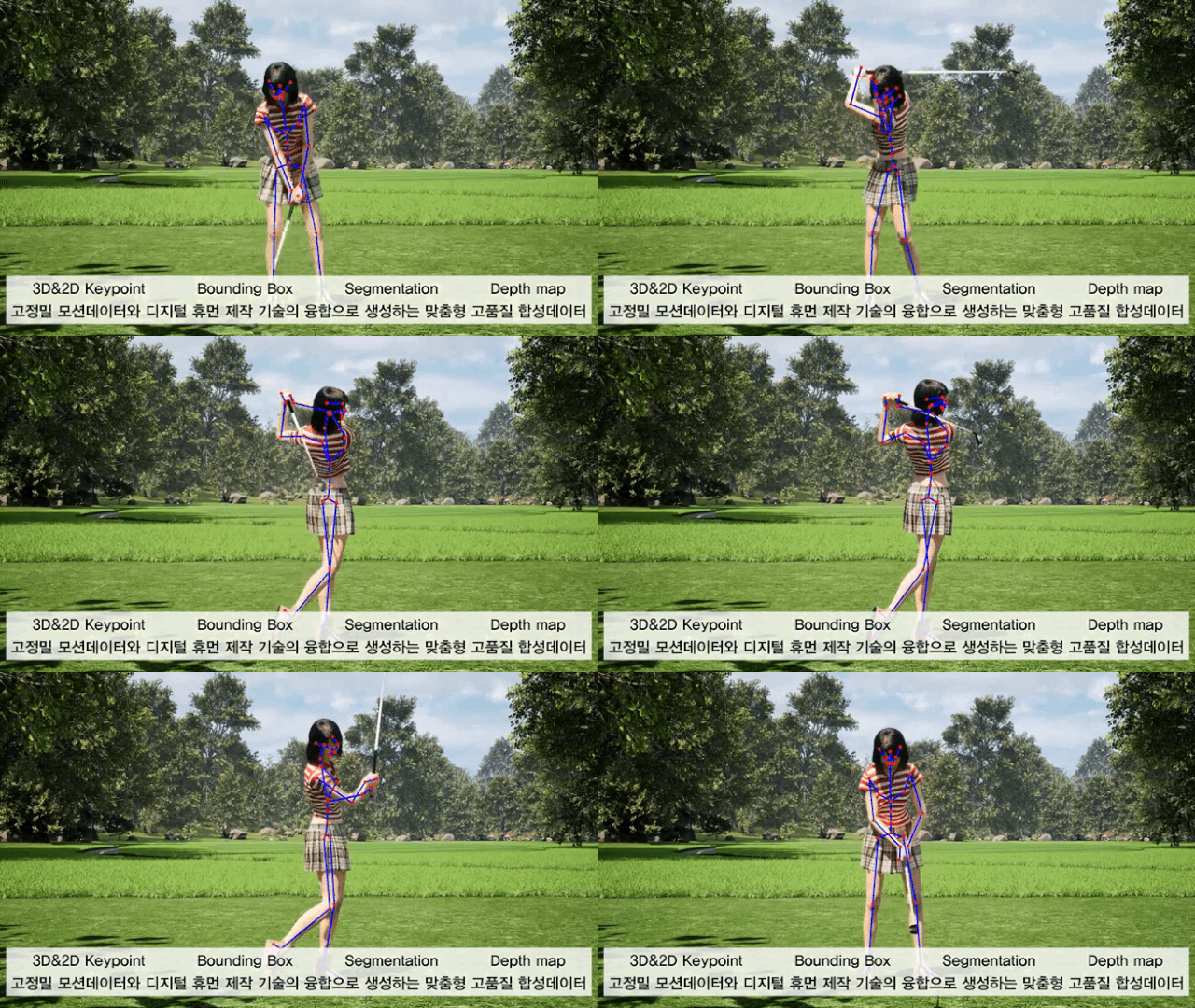
The data Company A needed were golf swing attitudes in various indoor and outdoor environments. Such data is uncommon in the market, and the process of supervising each human coach leads to a very long imbalance in time, cost, and quality when converting them into data. This is because any number of different data can be created depending on the condition and teaching method of the participant or coach. There were dozens of scenarios needed.
In response, Visol allowed professional golfers and ordinary people invited by Company A to perform the necessary scenario movements at the in-house motion capture studio, and generated a large amount of sophisticated 3D modeling synthetic data based on the collected real numbers.
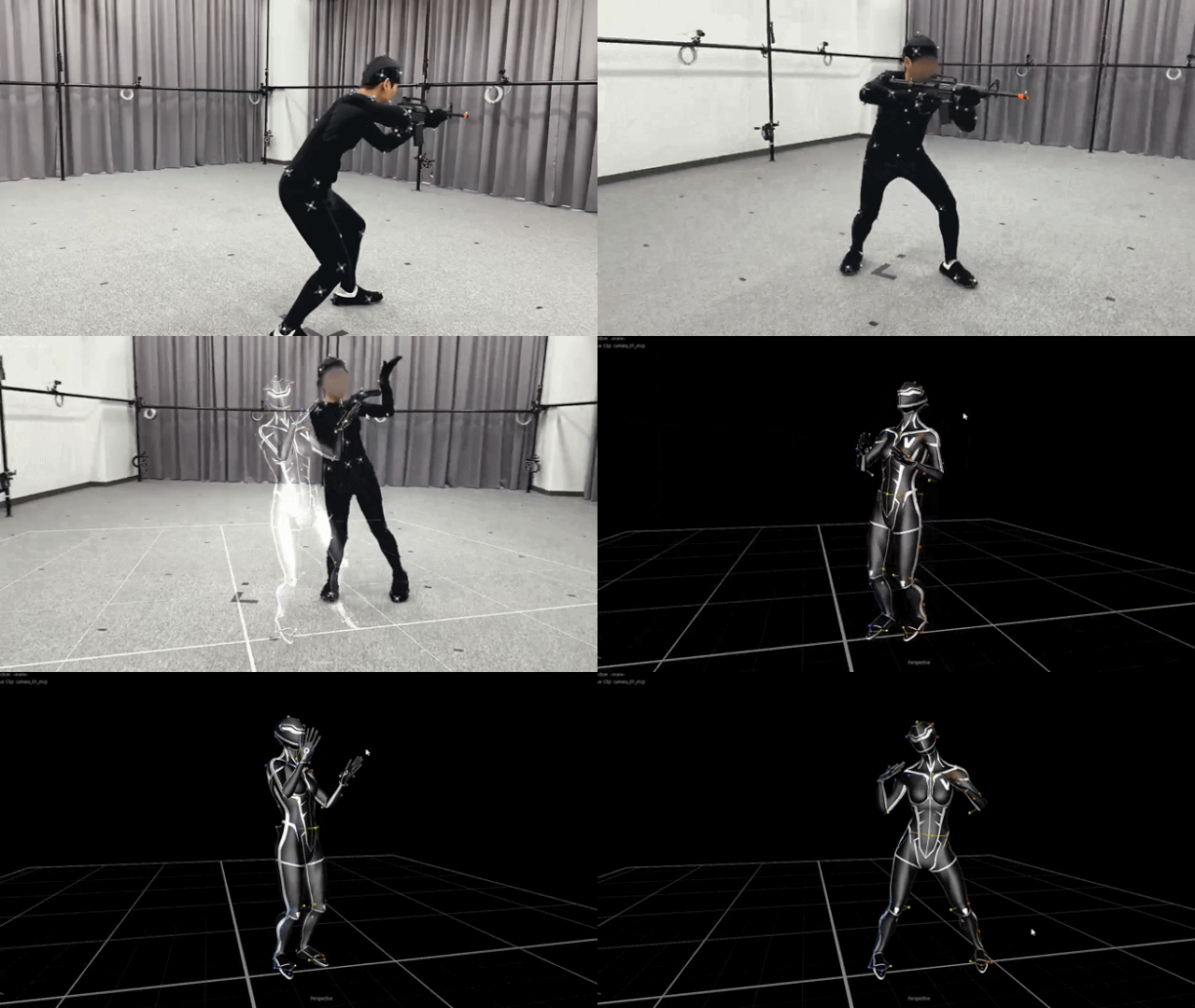
Team leader Baek said, "There are so many variables such as a right-handed person hitting at-bat, a person with a bad posture in the first place, different body types, and perspectives that vary depending on the angle of the camera." Above all, such data should be able to clearly identify factors such as "the position of the shoulder that cannot be hidden." In the existing method, the position of the arm or hand that is not visible in the photo data was designated as persimmon and the data was labeled (named). The problem is that in this case, inaccurate data are naturally created in the actual movement process, and it was effectively solved by using 3D modeling data."
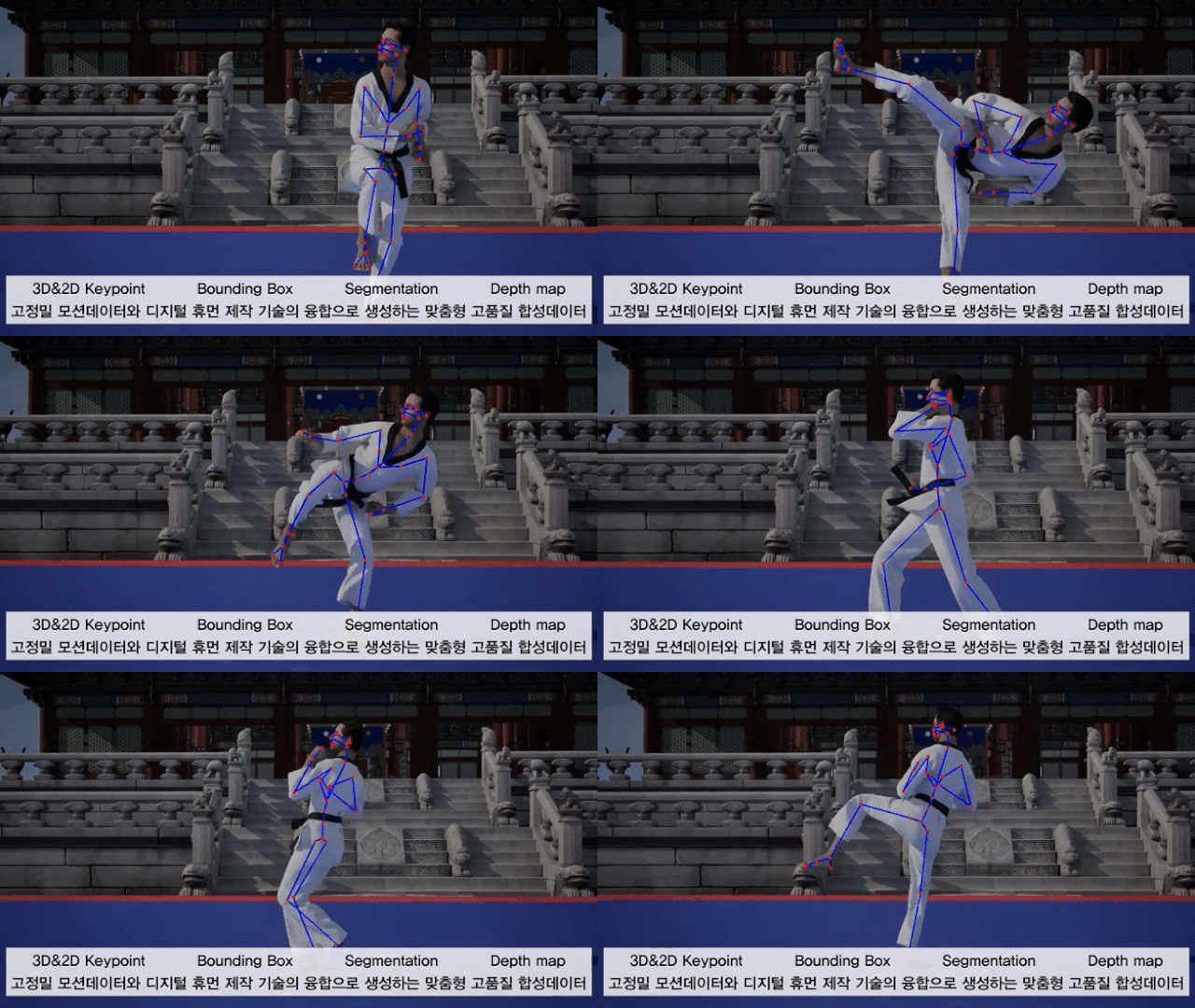
Since then, Visol has been studying the possibility of expanding the synthetic data business in various fields. Another use case using motion capture is the Taekwondo Poomsae screening solution. This can also be usefully used in AI systems to measure the accuracy of Taekwondo movements and improve training efficiency. In fact, if it is action-based data, the possibility of expansion is endless. In particular, as all the data produced by Vissol are free from copyright issues, it acts as another business competitiveness in the AI market, where the issue of data source is a recent issue.
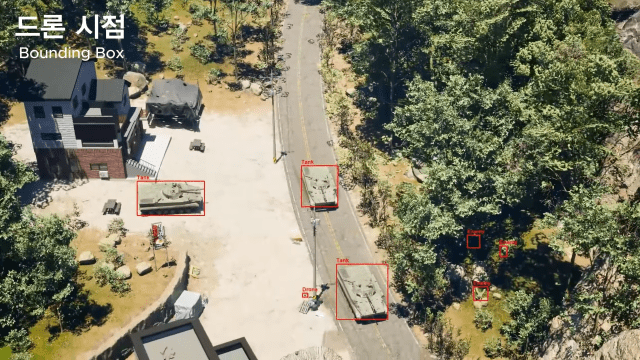
Visol is also continuing research on synthetic data on special environments. The main field is research on the generation of synthetic data assuming special situations such as 'disaster' and 'war' based on the company's ability to implement a 3D modeling environment and build dynamic synthetic data secured for a long time. In particular, the military field is an area where the demand for AI simulation and AI training is increasing in line with the global military advanced trend, but it is also difficult to secure sufficient data. Likewise, Visol plans to continue to expand the synthetic data business through preemptive research and case acquisition in these fields.
However, they agreed that synthetic data is not universal. "No piece of learning data can be identical to real data. However, VISOL uses 3D-modeled objects based on numerical information and high-quality motion data collected through a high-precision optical motion capture system, which can meet various AI performance improvement requirements," Baek said. "We will continue to directly verify our generated data to the internal machine learning (ML) convergence development team. If synthetic data can lead to even a few percent improvement in performance, it will be worth it in itself."
As Team Leader Baek said, many research papers confirm that 3D modeling synthetic data is already achieving tangible results in various areas such as ▲ game production ▲ robotics-based product assembly ▲ animal movement observation and analysis.
What is the impact of synthetic data in terms of actual business and sales? Visol calculates related sales by supplying synthetic data or synthetic data directly included in the current supply of its AI solutions. As of this year, profits are expected to be about 2 to 3 billion won, and it plans to expand its business to 8 billion won next year.
Team leader Baek said, "Although the number of cases of using synthetic data in Korea is increasing, the majority of people still recognize that it is insufficient as data. Fortunately, it is fortunate that the government has moved to foster and encourage synthetic data in policy," and emphasized, "However, it is time to think about how to use synthetic data in more active and diverse ways than now to strengthen competitiveness in the rapidly developing AI industry."
